California Forest Improvement Program
CFIP will not be accepting applications until further notice.
The purpose of the California Forest Improvement Program (CFIP) is to encourage private and public investment in, and improved management of, California forest lands and resources. This focus is to ensure adequate high quality timber supplies, related employment and other economic benefits, and the protection, maintenance, and enhancement of a productive and stable forest resource system for the benefit of present and future generations.
The program scope includes the improvement of all forest resources including fish and wildlife habitat, and soil and water quality. Cost-share assistance is provided to private and public ownerships containing 20 to 5,000 acres of forest land. Cost-shared activities include:
- Preparation of a Forest Management Plan by a Registered Professional Forester (RPF)
- RPF Supervision of the following:
- Reforestation
- Site Preparation
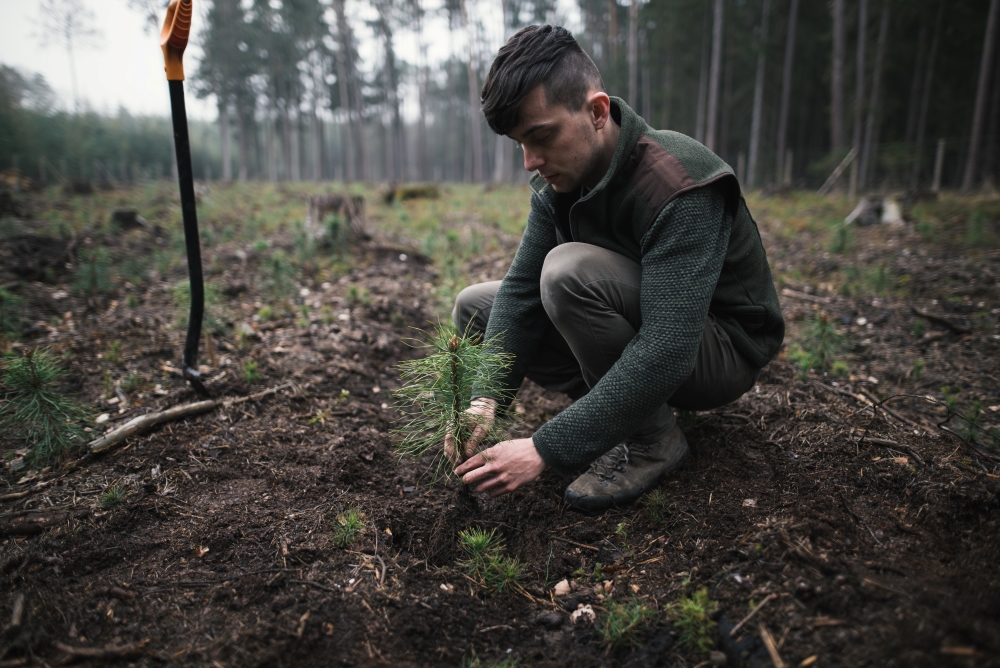
- Trees and Planting
- Tree Shelters
- Stand Improvement
- Pre-commercial Thinning or Release
- Pruning
- Follow-up (includes mechanical, herbicide and/or slash disposal follow-up)
- Forestland conservation practices / fish and wildlife habitat improvement
- Reforestation
Broadcast/controlled/cultural burning is not eligible for CFIP cost share. For a list of other practices not eligible for CFIP cost-share, please review the User’s Guide.
Program staff are available to provide advice on forest management related matters.

California Forest Improvement Program (CFIP) is part of California Climate Investments, a statewide initiative that puts billions of Cap-and-Trade dollars to work reducing greenhouse gas emissions, strengthening the economy, and improving public health and the environment — particularly in disadvantaged communities.
California Forest Improvement Program (CFIP) forma parte de las Inversiones del Clima de California, un iniciativa estatal que destina miles de millones de dólares de Cap-and-Trade para la reducción de gases de efecto invernadero, fortalecimiento de la economía y mejoramiento de la salud pública y el medio ambiente – especialmente en comunidades en desventaja.
The California Forest Improvement Program receives funding from a variety of other State and Federal sources. The varied funding sources may have different requirements or additional application procedures, so please always be sure to discuss your project with your Forestry Assistance Specialist (FAS) at the CAL FIRE unit in which your project resides, or the Regional FAS. Please refer to CFIP Contact List, at the bottom of this page in the Contact Us section.
When funding is available CFIP will award up to $2 million per solicitation. The highest ranked CFIP application packages which meet the criteria for the available funding source will be selected in each solicitation period and awarded a grant. Application packages that are not selected for funding will be retained and automatically entered the next solicitation to compete with new CFIP application packages that are submitted during that solicitation period. Application packages that have not been selected for funding after one year will be sent back to the project proponent with an explanation for why the project has not been funded.
CFIP will not be accepting applications until further notice.
CFIP solicitation periods close on the dates listed below.
January 2nd
April 1st
October 1st
THE NEWEST EDITION OF CFIP FORMS MUST BE USED. Projects submitted on old forms will be rejected upon submittal.
- Please contact the Forestry Assistance Specialist (FAS) for your county to inquire about applying for CFIP. FASs are also available to advise you on other forest management related matters. Use the CFIP Contact List to determine which FAS serves your county.
- For general inquires please contact CFIP@fire.ca.gov
Stewardship Forester
Meghan.Reeves@fire.ca.gov
More Information
- CFIP User's Guide
- CFIP 5 Year Strategic Plan is available by request. Please email CFIP@fire.ca.gov
- CFIP Cap Rates
- RM-10 CFIP Ranking Form
The American Tree Farm System is a program for woodland owners who are committed to sustainably managing their woods for wood, water, wildlife, and recreation. Each state program is run by a diverse group of partners, such as state agencies, non-profit organizations, volunteers, foresters, and landowners.
Follow the link below to learn more about the California program.